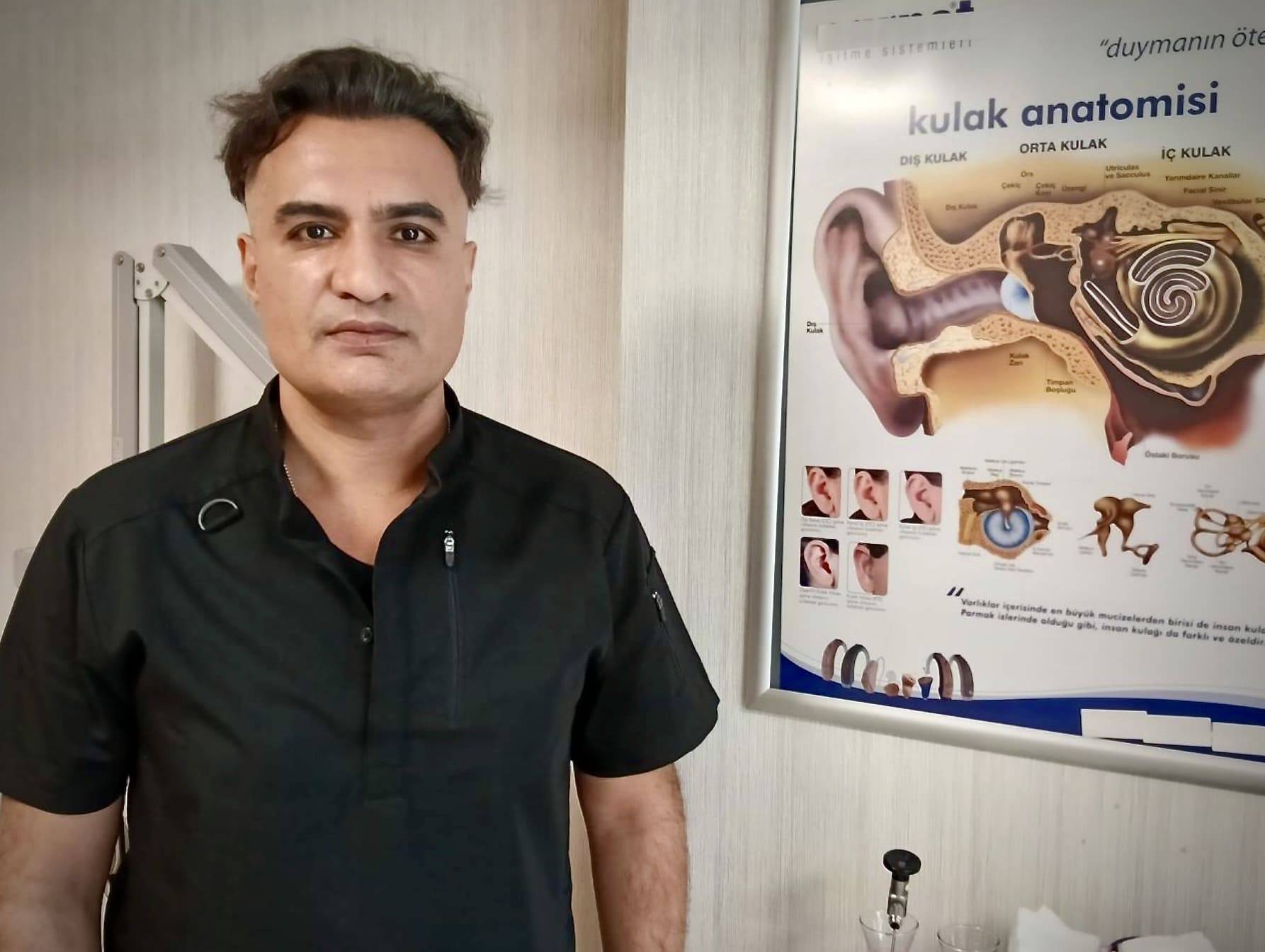
Dr. Kodaş: “Aesthetic Expectations Are Coming to the Fore in Prominent Ear Treatment”
Providing important information about issues of interest in prominent ear treatment, Op. Dr. Tuncay Kodaş stated that most patients apply for treatment due to aesthetic dissatisfaction.
ENT Specialist Op. Dr. Tuncay Kodaş, who works at Özel ENTO Cerrahi Tıp Merkezi, emphasized that prominent ears do not cause any health problems and that patients usually consult a physician due to dissatisfaction with their aesthetic appearance. Answering frequently asked questions about how the appearance of prominent ears can be corrected, Dr. Kodaş made important statements about the aesthetic treatment process.
Why Does Prominent Ear Appearance Occur? Is It Genetic?
Dr. Kodaş explained that prominent ear appearance occurs due to a structural problem in the antihelix of the ear and stated that this condition is not considered purely genetic, although genetics may still play a role. He noted that even individuals with no family history of prominent ears may have this condition.
Explaining that the ear has a more forward position due to the antihelix deformity, Dr. Kodaş said:
“Patients who consult us with complaints of prominent ears usually describe an aesthetic perception problem. In children, some psychologically based issues may also be observed. Especially among girls, complaints often involve covering the ears with hair when appearing in public. Both children and adults who experience this problem can find permanent solutions through treatment.”
When Can Prominent Ear Surgery Be Performed?
Dr. Kodaş stated that the most permanent solution for individuals trying to correct prominent ears with bands or similar methods is surgery. He said:
“The only permanent treatment for prominent ear deformity is surgical intervention. Prominent ear surgery, also known as otoplasty, can be performed on individuals aged 7 and above. Since children are more psychologically affected by this condition, we prefer not to delay surgery after the age of 7. In children, the operation is usually performed under general anesthesia. Otoplasty is not a long procedure; it typically lasts between one and one and a half hours. During this time, we reconstruct the antihelix and eliminate the prominent ear appearance.”
Two Types of Surgical Methods for Prominent Ears
According to Dr. Kodaş, two surgical techniques are used in prominent ear operations. The first is a suture technique performed without an incision, and the second is an open technique involving a small incision behind the ear.
“Each method has its own advantages and disadvantages,” said Dr. Kodaş.
“With the suture technique, recovery is faster, but the risk of the ear returning to its previous position is higher. The open technique with an incision behind the ear is more permanent. The risk of recurrence is much lower, although there is a small scar behind the ear and the healing process takes a bit longer.”
“The Prominent Ear Appearance Disappears After One Week”
Dr. Kodaş stated that a one-week dressing period is required for full recovery after surgery and added:
“One week after the operation, the prominent ear appearance disappears completely. Otoplasty is a simple procedure, and prominent ear treatment is easy. Patients return to normal life in a very short time. We frequently perform these surgeries in both children and adults, and positive results are obtained in all age groups.”
“Prominent Ear Correction in Children Is Performed Under General Anesthesia”
Dr. Kodaş noted that the first step is to determine the degree of antihelix development in patients presenting with prominent ear complaints. He explained that otoplasty can be performed under both general and local anesthesia depending on the condition.
“We prefer general anesthesia in children. In adults, if they wish, the procedure can be performed under local anesthesia,” he said.